BNL25

BNL25 5 liter

BNL25

Water-repellent stone sealer cream

BNL25 5 liter
€88,25 excl. VAT

€106,78

incl. VAT

Excl. shipping costs of €9.95 per item.
Free shipping from €150,-

  • Makes facades and walls of brick, concrete, plaster, natural stone, and grout durably water-repellent
  • Ready to use
  • Fast and deep action
  • Easy to apply with a block brush or paint roller
  • Usable on previously hydrophobized stones or mortars
  • Inhoud: 5 liter
  • |
  • EAN: 9501125919853

Online ordering only possible in the Netherlands and Belgium. Prices may differ outside the Netherlands and Belgium. For more information, please contact us.

BNL25

Product Description

BNL25 is a ready-to-use water-repellent cream based on a unique formula. It contains no harmful chemicals and thanks to new technology, it penetrates deeply into the surface, working very quickly.

BNL25 is developed to make walls moisture-resistant, dirt-repellent, and insulating. In most cases, the facade is water-repellent within an hour after application. After treatment, the product is invisible and provides extremely durable protection. The masonry is moisture-resistant, but vapor-permeable, thereby increasing the thermal insulation value. The product is also resistant to alkalis and acids and is unaffected by UV radiation from the sun.
Effective, simple, and easy to use Instructions for use

1

The substrate must be free of contamination and defects that will adversely affect successful hydrophobing.

2

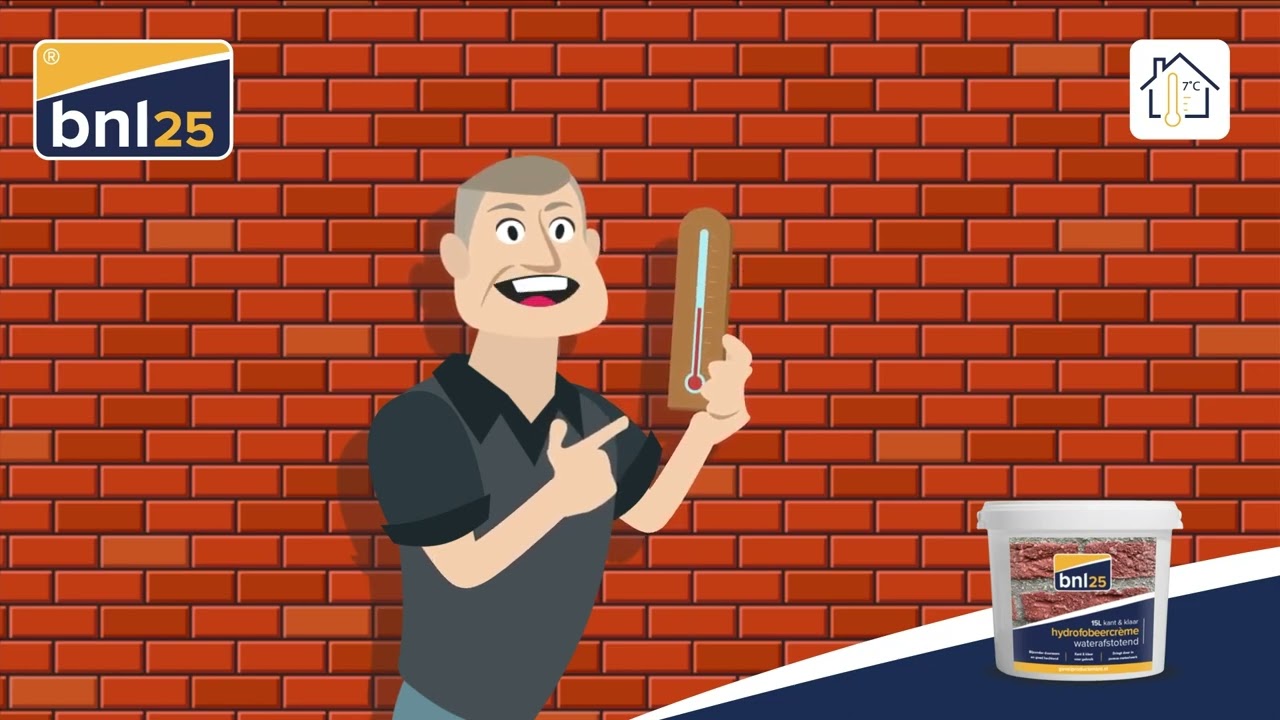
Ambient temperatures during application should be at least 7°C, up to max. 25°C.

3

Protect materials not to be treated with a suitable protective layer.

4

Wear liquid-tight gloves and safety goggles.

5

New Page

6

Protect the treated façade from rain for at least 30 minutes. Wind and direct sunlight can also adversely affect the penetration depth.

FAQ

How much do you use per m² when working with BNL 25?

With a bucket of 15 litres you can impregnate approximately 75 m².

Can every facade material be hydrophobized?

Our BNL products can be used for most types of facade bricks. We always recommend testing on a trial area first. It is designed to make facades of brick, concrete, natural stone and plasterwork water-repellent. Not sure whether your type of facade is suitable? Feel free to contact us for free advice.

What can I use if a facade has already been impregnated before?

You can treat it with BNL10 or BNL25. Please note! We always recommend checking older facades in particular, or enquiring whether they have been previously impregnated before applying a product.

How long is the guarantee after facade cleaning?

The guarantee after facade cleaning and impregnating depends on several factors, such as the condition of the facade and the correct application of the product. When everything is carried out correctly, our systems can provide 20 to even 40 years of protection.

How do I prevent lime efflorescence from coming back?

The most effective way is to impregnate (hydrophobize) the facade after cleaning. This makes the surface water-repellent. This not only extends the result, but also protects the facade in the long term.

Do you also offer facade cleaning?

Yes! We even recommend this on a regular basis. Because we have a large network of facade cleaning companies, cleaning companies and other companies active in impregnating facades and masonry in the Benelux/Europe, there is often a suitable party nearby that we can put you in contact with.

What is hydrophobizing (impregnating)?

Hydrophobizing, also known as impregnating, is the process of making a material water-repellent. This is done by applying a special coating or treatment, which prevents water from penetrating the stone or the pointing.

Are your products PFAS free?

Yes, within professional impregnating agents it has long been the standard not to use PFAS.

Why should I choose hydrophobizing?

  • It extends the lifespan of the facade.
  • Preservation of appearance.
  • It protects the facade against dirt, algae and moss.
  • It protects against moisture and weather influences. This prevents mould formation and frost damage.
  • The thermal insulation value is increased.